arefeh taherian - Digital portfolio

Implementation
You didn’t come this far to stop






Strategies for Successful Execution
Step-by-step guide to incorporate generative AI into business operations and organizational structures;
Based on
University of Michigan Approach
Exploration of the transformative possibilities that generative AI offers to our business.
identification of the right business problems, identification of abilities our generative AI solution needs, organization & integration of the right data.
The process to build, launch, and scale the AI solution, The analyze of critical factors that drive the long-term success
Automation, Step by Step
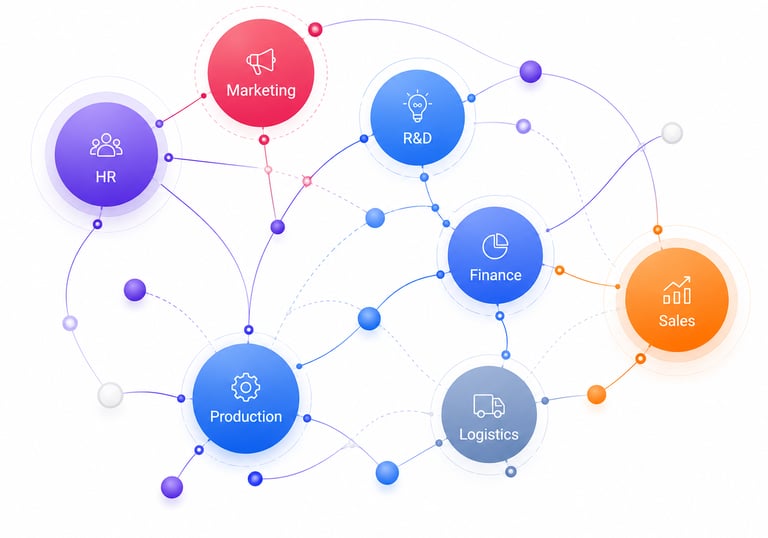
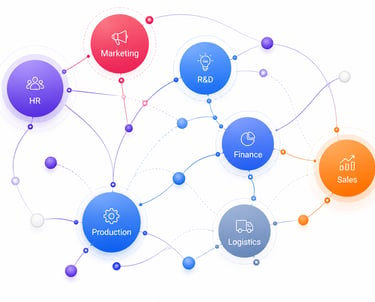
What if your enterprise operated more like a brain than a bureaucracy? Each node here represents a department, HR, sales, support, a finance. Once siloed, now connected through Gen AI-enabled context pathways. Like synapses in a neural network, these shared links let information, intent, and decisions flow seamlessly across teams. It's not just integration, it's intelligence.
Gen AI is no longer just about automating repetitive tasks.
It's evolving into a decision orchestrator, coordinating inputs, actions, and outcomes across all departments.
Model / Agent KPIs
KPIs for Cross-Functional GenAI Automation
KPIs transform abstract AI capabilities into measurable business value. For cross-team performance, focus on process and flow, KPIs, track the end-to-end process cycle time, which is the average time from trigger to completion, monitor cross-team SLA compliance percentage, measuring tickets closed within service level agreements versus total tickets, and finally, assess automation coverage percentage, which indicates the ratio of automated steps to total steps in a process. These metrics show how efficiently Gen AI streamlines your workflows across departments.
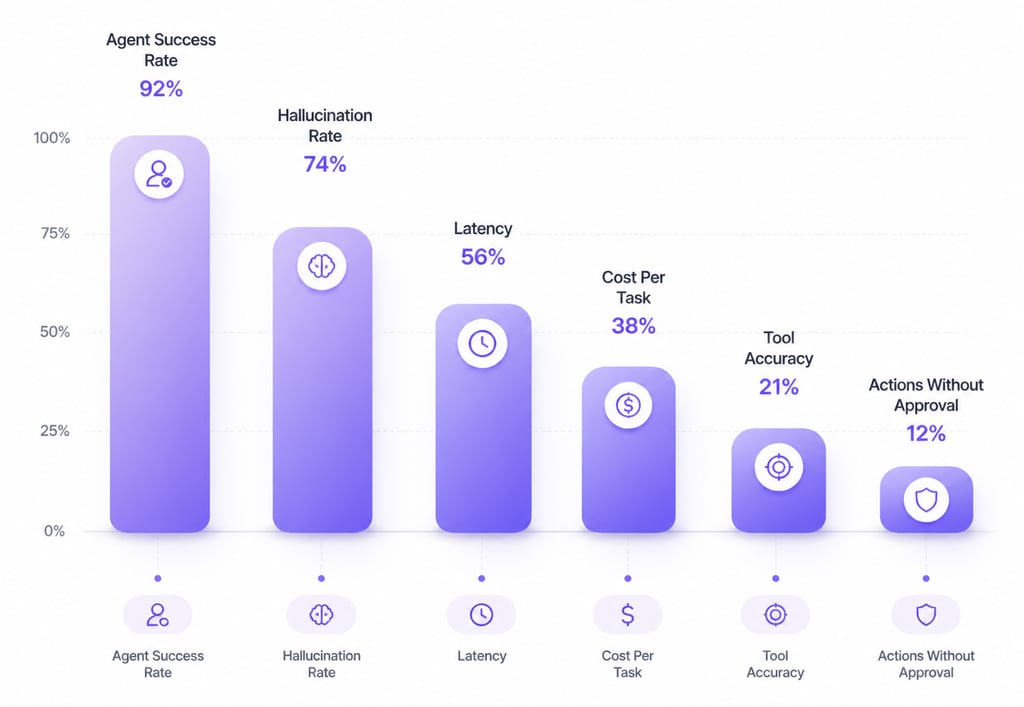
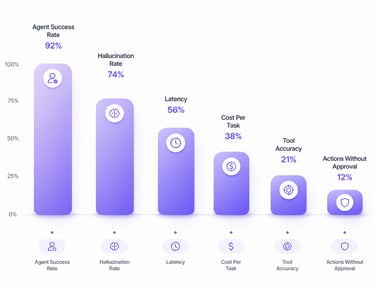
Are our AI Solutions high-performing, reliable, and continuously improving?
what defines performance for a GenAI Solution?
We will not “set-and-forget” solutions.
By continuously analyzing performance data and real-world interactions, we identify improvement opportunities, reduce risks, and refine outputs over time. The result is an AI ecosystem that remains reliable, aligned with business goals, and continuously evolving alongside your organization.